Technology. Human experience. The conversations in between.
Books & ideas / The reading room
Books to think with.
Companionship, human experience, engineering and power. Eight books to read across the boundaries of the field.
The two-line reviews are Anna’s personal views, alongside reading notes and questions for discussion.
Engineering · Ethics · Human values
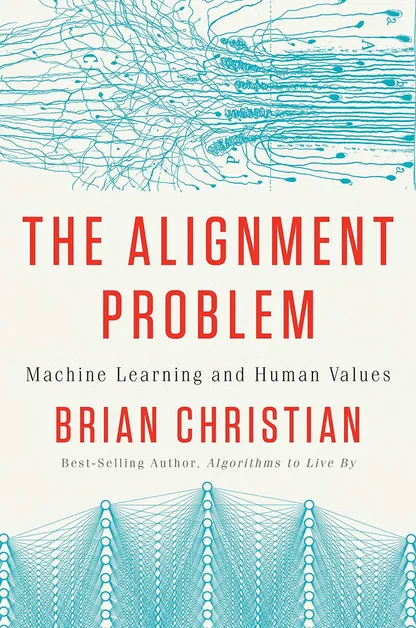
The Alignment Problem
Machine Learning and Human Values
Brian Christian
Reading note
What are we really asking a machine to learn—and what happens when the target misses the point? A starting place for exploring the distance between a measurable objective and the human values it is meant to represent. For conversational AI, it opens a useful question: does a response that scores well also serve the person receiving it?
Two-line review
A must-read for anyone interested in an accessible history of human–AI alignment. Top tip: the audiobook is fantastic.
A question to sit with
What would we measure if the goal were a good conversation rather than a highly rated reply?
What do we come to expect from relationships when a conversational partner is always available and asks so little of us? Turkle’s critique of AI intimacy makes room for a difficult discussion about empathy, attachment and the difference between feeling understood and being understood. A book to read alongside lived experience, with room for both agreement and disagreement.
Two-line review
If you see AI companions as positive, you will not like this book. Turkle emphasises the importance of human connection whilst conveniently forgetting that not all humans lead with empathy and kindness.
A question to sit with
Which parts of human connection can a system support—and which might it quietly change?
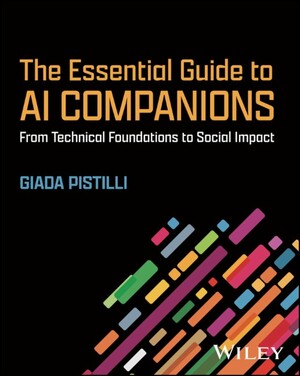
AI companionship sits at the meeting point of technical design and deeply personal experience. This is a starting point for a discussion about what people seek from companions, what these systems offer, and how to examine the relationship with curiosity and care. The questions belong to users as much as to the people building the products.
Two-line review
An important read for understanding the basics of AI companion design and the psychology of the people who use them. It focuses on the negative aspects of the phenomenon.
A question to sit with
What would an informed, thoughtful choice about AI companionship look like?
Long-horizon interaction · Continuity · Human experience
The Ultra-Long Horizon
What really happens in very long Human-AI conversations
A. Wojewodzka
Author introduction
What becomes visible when we stop treating a conversation as a single exchange? The Ultra-Long Horizon turns attention to very long human–AI conversations. It invites a closer look at what accumulates over time: expectations, shared context, misunderstandings and the work of maintaining continuity. A starting point for discussing the conversation as an experience that unfolds, rather than a collection of isolated replies.
A question to sit with
How does our understanding of a conversational system change when we stay with the interaction?
Forthcoming · Cover supplied by the author
Ethics · Responsibility · Governance
AI Ethics
The MIT Press Essential Knowledge series
Mark Coeckelbergh
Reading note
A compact invitation to ask better ethical questions about AI: who makes the decisions, whose values shape the system, and who carries the consequences? This belongs on the shelf as a companion to practical work, helping connect choices about data, transparency and responsibility with the wider social world those choices affect.
A question to sit with
Where does responsibility sit when an apparently simple reply comes from a much larger system?
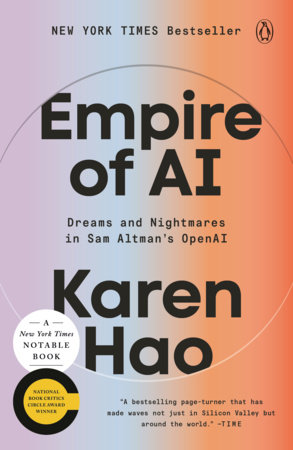
Behind a friendly interface sit organisations, resources, labour and competing ideas about the future. Hao’s reporting brings that wider picture into view. For a society interested in conversational AI, this is a reminder to look beyond the conversation itself and ask who builds these systems, who benefits from them, and who gets a say in their direction.
Two-line review
Read this especially if you are an unconditional proponent of AI technology. The book raises important issues around bias, economics, ecology and the human cost of AI training.
A question to sit with
What becomes harder to see when we experience an AI system only as a helpful voice?
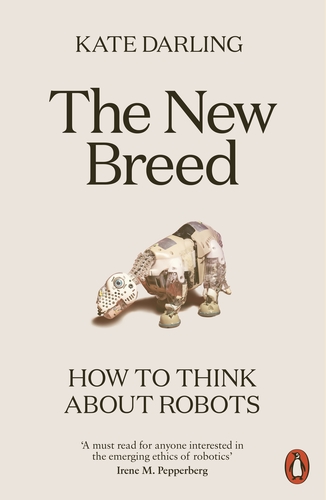
What if our relationships with animals offered a more useful way to think about robots than comparisons with people? Darling’s perspective opens up different questions about attachment, responsibility and coexistence. Although its focus is robots, it offers a productive lens for thinking about why people relate to conversational systems—and what that means for design.
A question to sit with
Can we take a relationship with technology seriously without treating the technology as human?
Power, Politics, and the Planetary Costs of Artificial Intelligence
Kate Crawford
Reading note
What sits behind an apparently effortless conversation with AI? Crawford examines the material and political foundations of these systems, from resource extraction and human labour to data and concentrated power. For conversational AI, this offers a wider frame for thinking about responsibility: beyond what a chatbot says, towards what it takes to make and sustain it.
A question to sit with
What should responsible conversational AI account for beyond the interaction on screen?